Essential 3D Printing Trends to Watch in 2026: Innovations That Will Transform Industry
Understanding 3D Printing Technology
3D printing, also known as additive manufacturing, is revolutionizing the way products are designed, produced, and delivered across various industries. This transformative technology allows for the creation of three-dimensional objects from a digital model by layering materials. Understanding the intricacies of 3D printing is essential for businesses looking to remain competitive in an increasingly digital world. When exploring options, 3D Printing provides comprehensive insights into this innovative process.
What is 3D Printing?
At its core, 3D printing is a manufacturing process that builds objects layer by layer from digital files. Unlike traditional subtractive manufacturing methods, which involve cutting away material from a solid block, 3D printing adds material only where it is needed. This unique approach not only reduces waste but also allows for the creation of complex geometries that would be impossible to achieve through conventional methods.
Key Components of 3D Printing
The primary components of a 3D printing system include:
- 3D Printer: The machine that performs the printing. Different types of 3D printers include Fused Deposition Modeling (FDM), Stereolithography (SLA), and Selective Laser Sintering (SLS).
- 3D Model: A digital representation of the object to be printed, typically created using CAD (Computer-Aided Design) software.
- Materials: The substances used to create the objects, which can range from plastics and metals to ceramics and bio-materials.
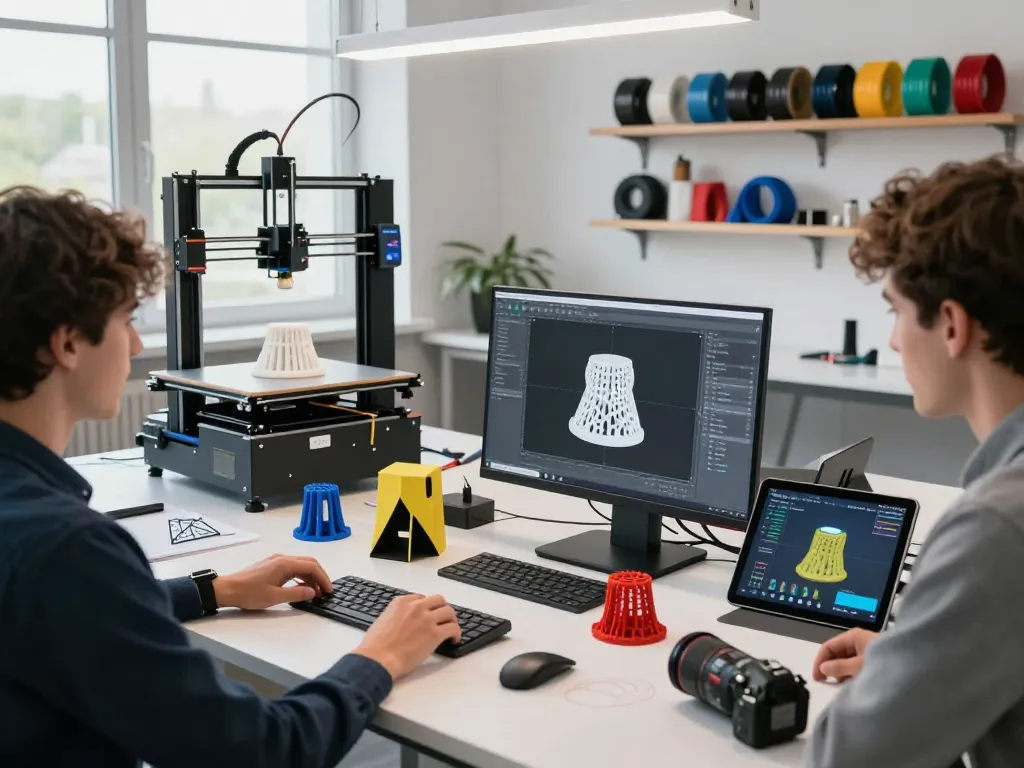
- Software: Programs used to prepare the model for printing, including slicing software that converts the 3D model into a format the printer can understand.
The Process of 3D Printing Explained
The 3D printing process generally consists of the following steps:
- Design: Create or source a 3D model using CAD software or online repositories.
- Slicing: Use slicing software to divide the model into layers and generate the corresponding G-code for the printer.
- Printing: Set up the printer and begin the printing process. The printer will build the object layer by layer according to the G-code instructions.
- Post-Processing: Once printing is complete, the object may require cleaning, curing, or additional finishing steps to enhance its aesthetic and functional properties.
Applications of 3D Printing Across Industries
3D Printing in Manufacturing
3D printing has significantly impacted the manufacturing sector by enabling rapid prototyping, customization, and on-demand production. Companies can now create prototypes faster and at a lower cost, reducing the time from concept to market. Major manufacturers such as Boeing and General Electric utilize 3D printing to produce complex components, streamline their supply chains, and minimize inventory costs.
Impact on Healthcare Innovations
In healthcare, 3D printing is at the forefront of innovation, facilitating the production of customized medical devices, prosthetics, and even bioprinted tissues. Hospitals and medical practitioners use 3D printing to create patient-specific implants, which improve surgical outcomes and enhance recovery times. For instance, companies like Organovo are pioneering the development of functional human tissues for drug testing and therapeutic applications.
3D Printing in the Arts and Design
The arts and design sector has embraced 3D printing as a tool for creativity and expression. Artists leverage this technology to create intricate sculptures, installations, and jewelry that push the boundaries of traditional craftsmanship. Designers can quickly iterate on concepts and produce unique pieces that reflect their artistic vision, while also engaging customers in customizable design experiences.
DIY 3D Printing: Getting Started
Choosing the Right 3D Printer
For enthusiasts interested in DIY 3D printing, selecting the right 3D printer is crucial. Factors to consider include the printer type, build volume, resolution, and ease of use. Beginners may opt for FDM printers due to their affordability and straightforward operation, while more experienced users might explore SLA or SLS printers for higher precision and material versatility.
Essential Tools and Materials for Beginners
Starting out in 3D printing requires some basic tools and materials. Essential items include:
- Filament: Common materials include PLA, ABS, and PETG, each suited to different applications.
- Prep tools: Scissors, pliers, and a utility knife will help in post-processing printed objects.
- Calibration tools: Digital calipers and leveling tools ensure your printer is accurately set up for optimal performance.
Common Challenges and Solutions in DIY 3D Printing
While 3D printing is accessible, beginners may face challenges such as print failures, warping, and adhesion issues. Strategies to overcome these include:
- Proper bed leveling: Ensure the print bed is accurately leveled to avoid adhesion issues.
- Temperature adjustments: Experiment with nozzle and bed temperatures based on the material used.
- Regular maintenance: Keep the printer clean and perform routine checks to ensure consistent quality.
Future Trends in 3D Printing
Advancements to Expect by 2026
The future of 3D printing is bright, with advancements in technology and materials anticipated by 2026. Innovations such as continuous liquid interface production (CLIP) will enable faster print times and higher precision. Additionally, advancements in multi-material printing will allow for more complex and functional objects, broadening the scope of applications in various sectors.
Environmental Impact and Sustainability in 3D Printing
As environmental concerns rise, the sustainability of 3D printing practices is becoming a focal point. The ability to create products on-demand minimizes waste, and developments in bio-based and recycled materials are paving the way for more eco-friendly options. Companies that adopt sustainable 3D printing processes can reduce their carbon footprint and appeal to environmentally conscious consumers.
3D Printing and the Future of Work
3D printing is reshaping the workforce by necessitating new skills and roles. As this technology becomes more integrated into various industries, professionals will need to adapt to concepts like digital manufacturing and design thinking. Educational institutions are already beginning to include 3D printing applications in their curricula to prepare the next generation for this evolving landscape.
Frequently Asked Questions about 3D Printing
How much does it cost to start 3D printing?
Starting 3D printing can range from a few hundred to several thousand dollars, depending on the printer and materials chosen. Hobbyist-level printers typically cost between $300 and $1,000, while professional-grade machines can exceed $5,000.
What materials can be used in 3D printing?
A variety of materials can be employed in 3D printing, including plastics like PLA, ABS, and PETG; metals such as titanium and aluminum; ceramics; and even organic materials for bioprinting applications.
Is 3D printing suitable for large-scale production?
While 3D printing excels in prototyping and small-batch production, advancements in speed and scalability are making it increasingly viable for larger production runs. Industries are beginning to adopt hybrid models that combine traditional manufacturing with 3D printing techniques.
What are common misconceptions about 3D printing?
Many misconceptions surround 3D printing, such as the notion that it is only suitable for hobbyists or that it can produce fully functional products with no post-processing. In reality, while hobbyist models exist, professional 3D printing encompasses a wide range of applications and often requires finishing work for optimal results.
How can I find 3D printing services near me?
Finding local 3D printing services can be done through online platforms and directories. Websites like Thingiverse and Printables provide community-driven resources for connecting with nearby services that can fulfill custom printing requests.